Photographs of British royals on U.S. soil do more than capture moments—they document the evolution of a transatlantic relationship forged in ceremony, diplomacy, and public spectacle. As King Charles III prepares for his state visit, a visual timeline of royal engagements reveals how each monarch and heir has shaped Britain’s image in America. These images, often splashed across front pages and broadcast globally, are not just photo ops—they’re calculated gestures of soft power.
From Queen Elizabeth II’s 1957 debut to Prince William’s low-key 2022 climate summit appearance, every visit carries subtext. The wardrobe choices, handshakes, and even weather play roles in public perception. Now, as Charles steps into his most significant U.S. engagement as king, revisiting these photos offers insight into continuity, change, and the enduring symbolism of monarchy in a republic.
The First Reigning Monarch to Visit: King George VI and the 1939 Pre-War Mission
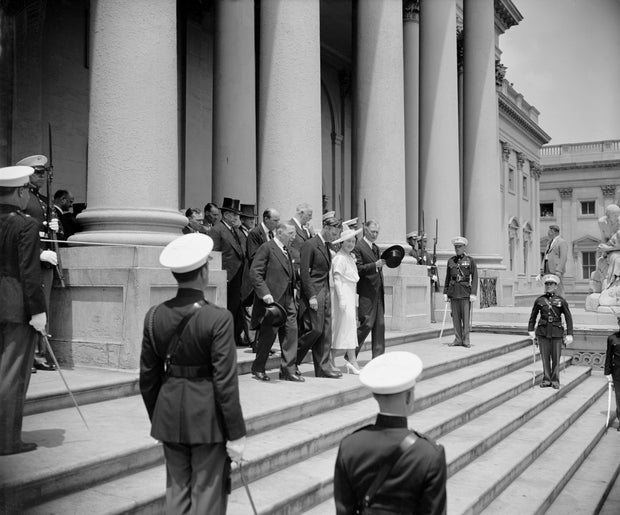
Before Queen Elizabeth II, it was King George VI who first broke precedent by becoming the first reigning British monarch to visit the United States. The 1939 trip—accompanied by Queen Elizabeth—was laden with geopolitical urgency. Nazi Germany loomed over Europe, and Britain needed American support.
Photographs from that visit show a careful choreography of goodwill: the royal couple dining with President Franklin D. Roosevelt at the White House, touring the 1939 New York World’s Fair, and even sharing a roast beef picnic at the Roosevelts' Hyde Park estate—an intentional display of modesty and warmth. One widely circulated image captures George VI and FDR laughing over grilled steak, a moment engineered to humanize the monarchy and align Britain with American values.
This visit set a template: use personal connection to advance diplomacy. The photos weren’t incidental—they were part of the strategy. Without modern social media, newspapers and newsreels amplified these visuals, shaping public opinion during a fragile moment in history.
Queen Elizabeth II: Eight Decades of Photographic Diplomacy
No royal has visited the U.S. more frequently or staged more potent photo moments than Queen Elizabeth II. Her first visit in 1957, as a young monarch, was a masterclass in image-making. Arriving at Washington National Airport, she descended the aircraft stairs in a crisp pink gown and matching hat, smiling under a Carolina-blue sky. That image, widely reproduced, framed her as both regal and approachable.
Over the decades, her visits evolved—and so did their photographic narrative:
:max_bytes(150000):strip_icc():focal(728x275:730x277)/princess-catherine-prince-william-donald-trump-king-charles-iii-trump-state-visit-uk-windsor-091725-8672599a27214b6f8ffdbb07fd7596e4.jpg)
- 1976: Bicentennial visit where she toured Colonial Williamsburg and presided over ceremonies in Philadelphia. A now-iconic photo shows her smiling aboard a barge on the Delaware River, waving to crowds from beneath a sunshade. The juxtaposition of ancient monarchy and revolutionary history was not lost on the public.
- 1991: During the Gulf War, she visited U.S. troops in Saudi Arabia but made a symbolic stop in Washington, photographed laying a wreath at the Tomb of the Unknown Soldier. The image projected unity and solemnity.
- 2007: Her final state visit emphasized longevity. At a White House dinner, she toasted President George W. Bush with a glass of Moët, captured in a warm, candid shot that became emblematic of her enduring rapport with American leaders.
Each photograph served a purpose: reinforcing alliance, humanizing royalty, and adapting the Crown’s image to shifting cultural expectations.
Prince Charles as Heir: From Climate Advocate to King
Long before his coronation, Charles used U.S. visits to promote causes close to his heart—particularly environmentalism. Unlike state visits, his trips were often lower-profile, blending diplomacy with advocacy.
A 2017 photo of him addressing a climate summit in New York, flanked by Leonardo DiCaprio and Al Gore, highlighted his role as a bridge between traditional monarchy and modern activism. Dressed in a dark suit rather than ceremonial robes, Charles appeared more statesman than sovereign—a calculated pivot.
Other images reveal a more personal side: playing polo in Argentina but stopping in Texas, walking through Central Park, or touring urban farms in Detroit. These visuals positioned him not just as a future king, but as a global citizen concerned with sustainability and social equity.
Now, as King Charles III, his state visit is expected to balance tradition with this legacy of engagement. Photos from this trip will likely emphasize both ceremonial gravitas and his signature causes—especially climate resilience.
William and Kate: The Modern Royal Brand in America
The Duke and Duchess of Cambridge represent a new era of royal optics. Their 2011 post-wedding tour included a stop in California, where they rode the subway in Los Angeles—an unprecedented move. Photos of them squeezing into a Metro train carriage, smiling and waving, went viral. It was a carefully orchestrated image of relatability.
In 2022, Prince William returned alone for the Earthshot Prize launch in Boston. Images from that visit struck a different tone: focused, professional, and mission-driven. One frame shows him shaking hands with a young climate innovator, both grinning under harsh conference lighting. Another captures him overlooking Boston Harbor at dusk, a lone figure in a suit, contemplative and purposeful.
Kate’s absence was notable—but so was the shift in focus. Gone were the days of pure pageantry; these photos emphasized action, legacy, and youth engagement. The visual language had changed: less "look at us," more "look at what we can do."
The Power of the Frame: How Royal Photos Shape Public Perception
Not all royal photos land successfully. A misstep in framing can spark backlash or undermine intent.
Consider Prince Andrew’s 2010 visit to the U.S., where photos of him schmoozing with wealthy donors in New York drew scrutiny years later due to his ties to Jeffrey Epstein. Once innocuous, those images became toxic—proof that context shifts over time.

Conversely, successful images often hinge on three elements: - Relatability: Royals shown eating, laughing, or engaging in everyday activities. - Symbolism: Wreath-layings, handshakes with veterans, or visits to memorial sites. - Contrast: Juxtaposing the grandeur of royalty with American informality (e.g., a tiara at a barbecue).
Charles’s upcoming visit will be scrutinized through this lens. Will he connect? Will the photos feel stilted or authentic? The answer may determine how this chapter is remembered.
Behind the Lens: How Royal Photo Ops Are Orchestrated
Every photo from a royal visit is the result of meticulous planning. Security, protocol, media access, and messaging are negotiated months in advance. The Royal Communications team works with U.S. counterparts to map out key visuals.
For example: - White House arrival ceremonies are shot from multiple angles to capture both the formal inspection of the honor guard and the more relaxed moments on the North Lawn. - Informal walksabout are scheduled in public spaces to generate candid-looking (but tightly controlled) images. - Evening events, like state dinners, are lit and framed for maximum elegance, often emphasizing decor, uniforms, and table settings as much as the royals themselves.
Press pools are rotated, but only select outlets get close access. Social media has increased demand for immediacy, so still photographers and videographers now deploy simultaneously—ensuring content floods platforms within minutes.
What to Watch for in King Charles III’s State Visit
As Charles takes center stage, several photo moments will carry extra weight:
- First arrival shot: Will he wave from the aircraft steps like his mother, or adopt a more reserved stance?
- Joint appearance with President Biden: A handshake on the White House lawn, possibly with Jill Biden and Camilla—framed to emphasize warmth and continuity.
- Speech or wreath-laying moment: Likely at Arlington National Cemetery or the Lincoln Memorial, underscoring alliance and shared values.
- Informal engagement: A walk through a community garden, a visit to a climate innovation lab—something that nods to his advocacy.
- Evening state dinner: The most choreographed photo op, where fashion, seating, and toasts are all part of the narrative.
Each image will be parsed—not just for aesthetics, but for what it signals about Charles’s approach to kingship in a skeptical, media-savvy world.
The Enduring Image: Why These Photos Still Matter
In an age of deepfakes and influencer culture, royal visit photos remain potent because they represent something rare: real, high-stakes diplomacy played out in public view. They’re not staged like ads, nor are they raw like citizen journalism. They occupy a middle ground—polished, intentional, but undeniably human.
As King Charles III steps onto American soil, the cameras will roll. The best photos won’t just show a king visiting a president. They’ll show a monarchy adapting—still ceremonial, but striving to stay relevant. And like every visit before it, this one will be remembered not in speeches, but in snapshots.
Review past royal visit photos before Charles’s arrival. Notice the evolution in setting, expression, and message—then watch closely for the new visual language he brings.
Frequently Asked Questions
What was the first British royal visit to the U.S.? The first visit by a reigning British monarch was King George VI in 1939, accompanied by Queen Elizabeth. The trip aimed to strengthen U.S.-UK relations before World War II.
How many times did Queen Elizabeth II visit the United States? Queen Elizabeth II made 26 official visits to the U.S. between 1951 and 2011, including eight state visits.
Did Prince Charles visit the U.S. before becoming king? Yes, Prince Charles visited the U.S. over 20 times as heir apparent, promoting environmental causes, cultural ties, and charitable initiatives.
What was notable about William and Kate’s 2011 U.S. visit? Their tour included a highly publicized ride on the Los Angeles Metro, generating global photos that emphasized their down-to-earth image.
Are royal visit photos planned in advance? Yes, nearly every photo moment is coordinated between royal staff, the U.S. State Department, and media pools to ensure security and messaging goals.
Why are state visit photos important in diplomacy? They humanize leaders, reinforce alliances, and project soft power—often reaching more people than official statements.
Will King Charles focus on climate issues during his U.S. visit? Given his long-standing advocacy, it’s expected that environmental resilience and sustainability will be key themes, likely reflected in photo opportunities.
FAQ
What should you look for in Royal Visits to America: A Photographic Journey Through History? Focus on relevance, practical value, and how well the solution matches real user intent.
Is Royal Visits to America: A Photographic Journey Through History suitable for beginners? That depends on the workflow, but a clear step-by-step approach usually makes it easier to start.
How do you compare options around Royal Visits to America: A Photographic Journey Through History? Compare features, trust signals, limitations, pricing, and ease of implementation.
What mistakes should you avoid? Avoid generic choices, weak validation, and decisions based only on marketing claims.
What is the next best step? Shortlist the most relevant options, validate them quickly, and refine from real-world results.