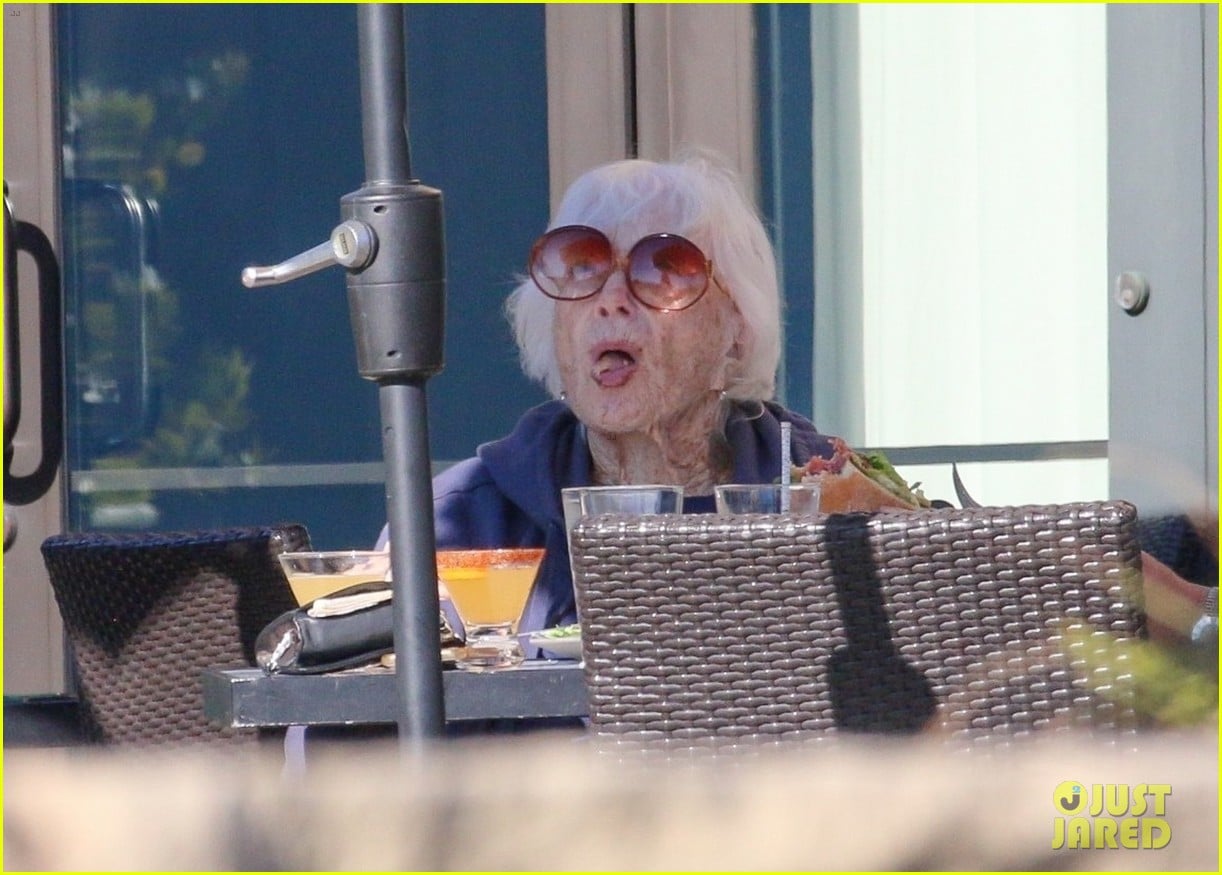
At 91, Shirley MacLaine still commands attention—not through red carpets or blockbuster premieres, but through the quiet power of presence. Recently, the Oscar-winning actress was spotted enjoying a rare lunch in Malibu, leaning lightly on an aide as she navigated into a seaside restaurant. The sighting, subtle and unscripted, reminded the world that behind the legacy of a Hollywood trailblazer is a woman navigating the later chapters of life with dignity and grace.
For fans who grew up watching her defy norms in The Apartment, command the screen in Terms of Endearment, or dance across genres with fearless charm, the image of MacLaine needing assistance stirred mixed emotions. It wasn’t a fall from glory, but a human moment—a glimpse into the reality many icons face when the spotlight dims and time moves forward, relentless and unyielding.
A Legend Steps Out—Why
This Outing Matters
Shirley MacLaine’s appearance in Malibu wasn’t headline-making by typical celebrity standards. No paparazzi ambush. No movie promotion. Just a quiet meal, a supportive aide, and a woman who helped redefine what it meant to be a leading lady in Hollywood.
But precisely because it was so ordinary, it resonated.
In an industry obsessed with youth, MacLaine’s outing stands as a quiet rebellion. She didn’t come to perform. She came to live. And in doing so, she reminded us that aging isn’t a retreat from relevance—it’s a different kind of visibility.
Her presence, assisted but unmistakably present, challenges the cultural script that equates independence with worth. At 91, needing help doesn’t erase a lifetime of achievement; it underscores the passage of time that every human shares—stars included.
"People forget I’m still here. Still thinking. Still feeling. Still curious." —Shirley MacLaine, The Guardian, 2021 interview
This outing, small as it may seem, became a moment of connection between a fading public image and the enduring spirit beneath it.
The Malibu Moment: What We Know
The sighting occurred mid-afternoon at a low-key oceanfront eatery popular with longtime locals and discreet celebrities. Witnesses reported MacLaine arriving in a black SUV, dressed in neutral tones with a wide-brimmed hat shielding her face. An aide—described as calm, attentive, and professional—walked beside her, offering an arm as they ascended a short ramp to the entrance.
She was seated at a corner booth, facing away from the main dining area. According to staff (speaking anonymously), she ordered tea and a small salad, sipped slowly, and left after about 40 minutes. No photos were taken by staff or patrons, out of respect.
What made this notable wasn’t the menu or the location—it was the rarity.
Over the past five years, MacLaine has largely retreated from public view. Her last major interview was in 2022, and she hasn’t attended a high-profile event since the 2018 Film Independent Spirit Awards. While she’s never been one to crave celebrity spectacle, even her closest associates note that her mobility has become more limited in recent years.
Still, those who know her say she remains mentally sharp, politically vocal, and philosophically restless.
Shirley MacLaine: The Trailblazer Behind the Quiet Exit

To understand why a simple lunch sparks such emotional response, one must reckon with MacLaine’s legacy—not just as an actress, but as a disruptor.
Born Shirley MacLean Beaty in 1934, she entered Hollywood almost by accident, initially hired as a dancer, then thrust into stardom when she replaced Carol Haney in the film version of The Pajama Game. From there, her career blazed through six decades, marked by:
- An Academy Award for Best Actress (Terms of Endearment, 1983)
- Five additional Oscar nominations across four decades
- A Golden Globe Cecil B. DeMille Award for Lifetime Achievement
- Pioneering roles for women in film as producer, writer, and director
But more than awards, MacLaine challenged the system. She insisted on equal pay long before it was common. She fought for creative control. She spoke openly about reincarnation, spirituality, and government conspiracies—earning both ridicule and a cult following.
While contemporaries like Audrey Hepburn or Grace Kelly embraced elegance and restraint, MacLaine was electric, unpredictable, and fiercely independent. She dated billionaires, studied Eastern philosophy, and once claimed to remember her past lives—including one as a pharaoh.
That same fearlessness now informs how she lives off-screen. Even in retreat, she refuses to be invisible.
Why Assistive Care Doesn’t Diminish a Legacy
There’s a subtle tension in how society views aging icons. We celebrate their pasts but grow uncomfortable when they age in public. When we see a legendary figure using a cane, leaning on help, or moving slowly, some instinctively interpret it as decline.
But for someone like MacLaine, needing assistance isn’t a loss of stature—it’s a continuation of life.
Consider this: MacLaine has been a vocal advocate for holistic health and alternative medicine for decades. In her books, including Out on a Limb and Dancing in the Light, she discusses energy, intention, and the body as a vessel—not an obstacle.
Now, at 91, her use of an aide likely reflects pragmatism, not defeat. It’s not that she’s “failing” to stay independent; it’s that she’s choosing to stay engaged. The alternative—staying home out of fear or pride—would be a far greater loss.
Other Hollywood legends have navigated similar terrain:
- Olivia de Havilland, until her death at 104, gave interviews from home with aides nearby
- Kirk Douglas used a wheelchair in later years but continued writing and advocacy
- Jane Fonda, at 86, trains publicly but acknowledges selective recovery days
MacLaine’s lunch in Malibu fits this pattern: a choice to participate, on her own terms.
The Cultural Weight of a “Rare Outing”
When a star of MacLaine’s caliber makes a public appearance after months or years of absence, it becomes news—not because of what happened, but because of what it symbolizes.
A “rare outing” tells us:
- The person is still alive, still engaging
- The legend hasn’t fully retreated
- There’s still a connection between icon and public
This is especially true for Baby Boomers and older Gen Xers who grew up with MacLaine’s films. For them, seeing her—even if frail—offers a strange comfort. It’s a thread to their own youth, a reminder that time moves, but some things endure.
But there’s also a voyeuristic risk. Photos or invasive reporting could turn a private moment into spectacle. Fortunately, in this case, discretion prevailed. No blurry long-lens shots. No viral clips. Just word-of-mouth and respectful silence.
That restraint, rare in today’s content-saturated world, may be the most meaningful part of the story.
What Shirley MacLaine’s Choices Teach Us
MacLaine has never lived by Hollywood’s rules. So it’s no surprise she’s not aging by them either.
From this sighting, we can draw practical truths about life, visibility, and dignity in later years:
1. Presence Over Performance She didn’t go out to “show up” or prove anything. She went to live—eat, breathe, be seen in real life, not curated content.
2. Acceptance Isn’t Surrender Using an aide doesn’t mean she’s given up. It means she’s prioritizing quality of life over appearances.
3. Privacy Is a Right, Not a Luxury Despite her fame, she’s maintained control over her narrative. Her outings are rare because she chooses them—not because she’s hiding.
4. Legacy Lives Beyond the Spotlight You don’t need to headline awards shows to matter. Influence lingers in films, interviews, books, and the way you’ve lived.
For those caring for aging parents or planning for their own later years, MacLaine’s approach offers a model: stay engaged, but on your own terms.
The Enduring Power of a Hollywood Original
Shirley MacLaine was never just an actress. She was a force—a woman who danced in Busby Berkeley numbers, fought studio heads, explored metaphysics, and never apologized for being different.
Now, at 91, she’s teaching a new lesson: how to age without apology.
Her lunch in Malibu wasn’t a comeback. It wasn’t a statement. It was simply a day. But in that simplicity, there was profundity.
She walked in with help. She sat quietly. She drank her tea. And in doing so, she reminded us that icons don’t vanish. They evolve.
And sometimes, the most powerful moments aren’t the ones on screen—but the ones we almost miss.
FAQ
Why was Shirley MacLaine seen with an aide in Malibu? At 91, MacLaine likely uses assistance for mobility and safety during outings. The aide was observed providing subtle support, reflecting practical care in later life.
Is Shirley MacLaine still alive? Yes, as of the latest reports, Shirley MacLaine is alive and residing in California, maintaining a private but active lifestyle.
How old is Shirley MacLaine? Shirley MacLaine was born on April 24, 1934, making her 91 years old.
What was Shirley MacLaine’s most famous role? She won the Academy Award for Best Actress for her role as Aurora Greenway in Terms of Endearment (1983), a performance hailed as one of the greatest in film history.
Does Shirley MacLaine have any living family? Yes, her brother, actor Warren Beatty, is still alive. They have maintained a close but private relationship over the decades.
Has Shirley MacLaine retired from acting? She hasn’t officially retired but has significantly reduced her public appearances and film work since the early 2020s.
Where does Shirley MacLaine live now? She is believed to reside in the Los Angeles area, splitting time between homes, including one in Malibu.
FAQ
What should you look for in Shirley MacLaine, 91, Spotted in Rare Malibu Lunch Outing? Focus on relevance, practical value, and how well the solution matches real user intent.
Is Shirley MacLaine, 91, Spotted in Rare Malibu Lunch Outing suitable for beginners? That depends on the workflow, but a clear step-by-step approach usually makes it easier to start.
How do you compare options around Shirley MacLaine, 91, Spotted in Rare Malibu Lunch Outing? Compare features, trust signals, limitations, pricing, and ease of implementation.
What mistakes should you avoid? Avoid generic choices, weak validation, and decisions based only on marketing claims.
What is the next best step? Shortlist the most relevant options, validate them quickly, and refine from real-world results.